In 2027, private landlords in England and the wider UK face three major regulatory and financial shifts. The mandatory regional rollout of the National Landlord Database across England, the expansion of Making Tax Digital (MTD) to landlords earning over £30,000, and separate, higher Income Tax rates on property profits from April 2027.
Following the implementation of periodic tenancies and the abolition of Section 21 in May 2026, 2027 is the year enforcement, digital reporting, and taxation are tightened. At Ultralets, we spend every day helping landlords navigate legislative shifts without the stress, ensuring portfolios remain compliant, profitable, and ahead of the curve.
Whether you manage a single buy-to-let or a multi-property portfolio, here is our clear breakdown of everything you need to prepare for in 2027.
1. The National Landlord Database Rollout (England)
Starting 15 December 2026 and running through 14 November 2027, all private landlords in England must register themselves and every occupied rental property on the government’s new Private Rented Sector (PRS) Database.
Registration is mandatory, costs £65 per property per year (prorated during the 2027 rollout), and is staggered across nine English regions. Missing your regional deadline can trigger local council civil penalties of up to £7,000, or up to £40,000 for repeated or serious breaches.
2027 Regional Registration Deadlines
Your deadline is determined by the property’s postcode, not where you live. If you own properties across multiple regions, you can register your entire portfolio from 15 December 2026 onward, provided no property misses its local cut-off date. (For our landlords across Hull, East Riding, and the wider Yorkshire and the Humber region, registration opens on 15 April 2027 with a strict deadline of 14 July 2027.)
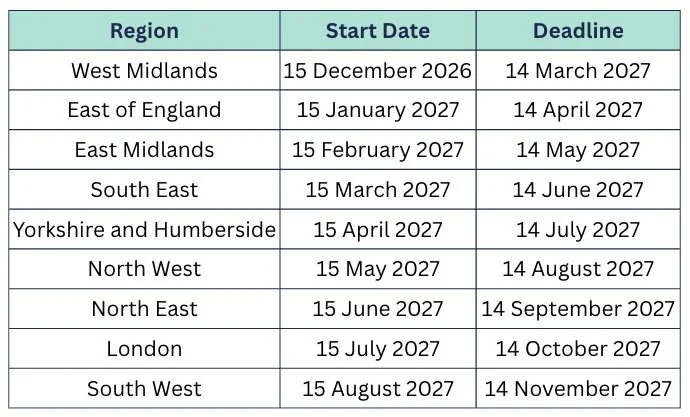
The Landlord Register rollout information and deadline dates.
What You Need to Upload
While a proactive managing agent like Ultralets can handle the day-to-day tracking of your compliance paperwork, legal responsibility for completing registration rests solely with the landlord. Before your window opens, gather:
Compliance certificates: Valid Gas Safety Certificate, Electrical Installation Condition Report (EICR), and Energy Performance Certificate (EPC).
Property & licensing details: Number of bedrooms, furnishing status, rent charged, and any HMO or selective licensing numbers.
Ongoing updates: You must update the database within 28 days whenever a certificate is renewed, rent changes, or occupancy shifts.
Read more on the Landlord Database here > Register Your Rental Property Blog
2. Making Tax Digital (MTD) Drops to £30,000
From 6 April 2027, Making Tax Digital for Income Tax becomes mandatory for landlords and sole traders with qualifying gross income over £30,000.
HMRC measures this threshold against your total gross rental and self-employment income on your 2025/26 tax return, before deducting mortgage interest, repairs, or agent fees. If you jointly own a property, only your share of the gross rent counts toward the £30,000 limit. (Note: Non-resident landlords who were exempt in 2026/27 also enter MTD from April 2027 if over the threshold.)
Your 2027/28 MTD Reporting Calendar
Instead of filing one annual Self Assessment return in January, affected landlords must keep digital records and submit four quarterly summaries via HMRC-compatible software (or bridging software):
Q1 Update (6 Apr – 5 Jul 2027): Due 7 August 2027
Q2 Update (6 Jul – 5 Oct 2027): Due 7 November 2027
Q3 Update (6 Oct – 5 Jan 2028): Due 7 February 2028
Q4 Update (6 Jan – 5 Apr 2028): Due 7 May 2028
Final Declaration & Tax Payment: Due 31 January 2029
Ultralets Tip: HMRC has confirmed there will be no late-submission penalty points for quarterly updates during the 2027/28 transitional year. Use this window to get comfortable with digital record-keeping and make sure your monthly statements and maintenance invoices are cleanly itemised before penalties apply in 2028/29 when the threshold drops again to £20,000.
Learn more about the financials for Landlords here > Landlord Budget Blog
3. Higher Property Income Tax Rates from April 2027
From 6 April 2027, property profits in England, Wales, and Northern Ireland will be taxed under separate, higher Income Tax bands, adding 2 percentage points across every tier.
If you hold properties in your personal name rather than a limited company, you will need to budget for slightly tighter net margins in the 2027/28 tax year:
Property Basic Rate: Rises from 20% to 22%
Property Higher Rate: Rises from 40% to 42%
Property Additional Rate: Rises from 45% to 47%
The £1,000 property allowance and Rent a Room Scheme remain unchanged, and basic rate tax relief on residential mortgage finance costs adjusts to 22% to match the new property basic rate. However, if you are a higher rate taxpayer with significant rental profits, reviewing your portfolio structure and ensuring you are achieving maximum market rent is more important than ever.
Learn more about Income Tax Rates for Landlords here > Landlord Taxes Blog
4. Leasehold Reform & Service Charge Protections
Two major phases of leasehold reform take effect in 2027, with another planned for 2028, directly benefiting landlords who own leasehold flats.
A full blog dedicated to the Leasehold Reform can be found here > Leasehold Reform Blog
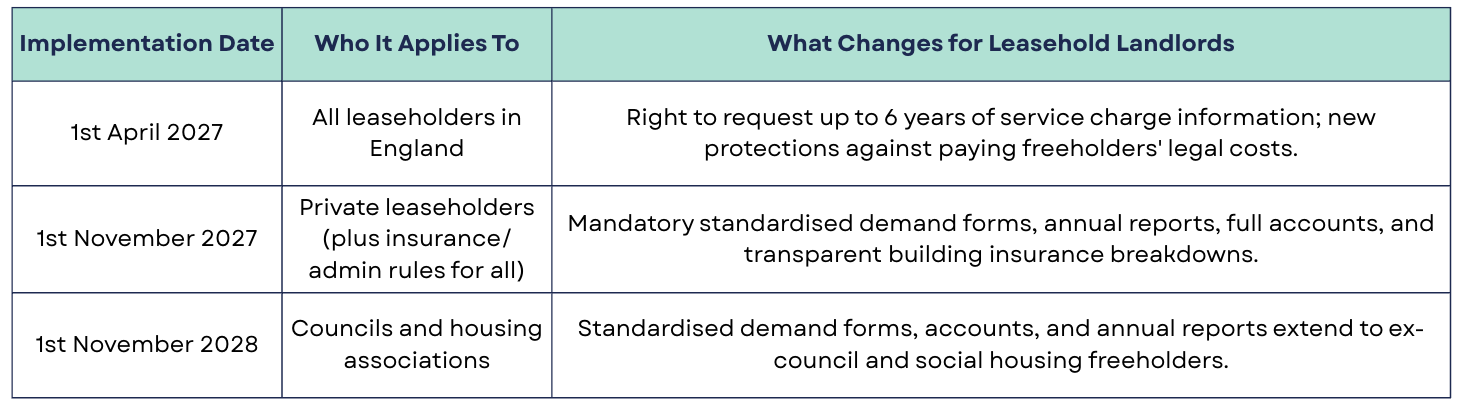
Leaseholder reform dates 2027 and 2028
5. EPC C Planning: Why 2027 Is the Year to Act Early
While the government’s target for all private rentals in England and Wales to reach EPC Band C has been unified to 1 October 2030, primary legislation and updated EPC assessment rules are moving forward in 2027.
In our experience managing over 1500 properties across East Yorkshire, landlords who plan energy upgrades gradually protect their cash flow far better than those caught in a last minute rush. Here is why 2027 is the smart time to act:
Locking in current ratings: Properties that achieve an EPC C under the current system before 1 October 2029 are set to remain compliant until that 10-year certificate expires, even after the stricter fabric focused EPC methodology launches.
Audit your "High D" properties in 2027: If a rental sits at a high D rating, minor upgrades (such as loft insulation top-ups, LED lighting, or smart heating controls) completed in 2027 can secure a C rating affordably before contractor demand surges.
Keep every receipt: Upgrade spend incurred from October 2025 onward counts toward the proposed £10,000 cost cap (or 10% of property value for homes under £100,000), provided you retain valid invoices and installer certificates.
Learn more about the incoming EPC changes here > Landlord Guide to EPC Regulations
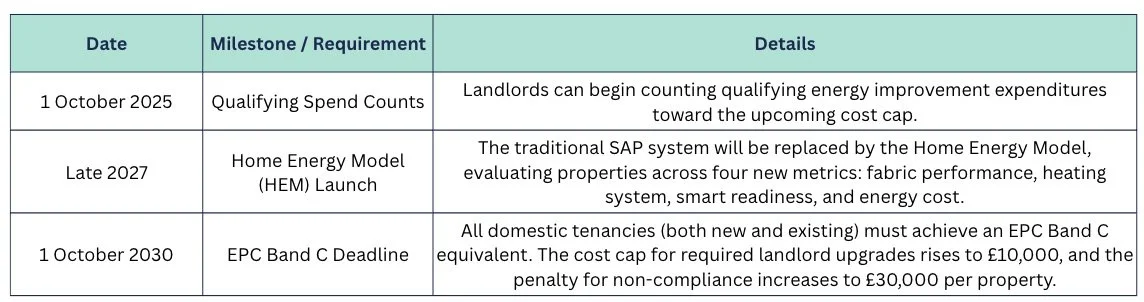
EPC Roadmap to 2030
Frequently Asked Questions (Landlords & Lettings in 2027)
Can my letting agent register my property on the National Landlord Database for me?
A letting or managing agent can upload property details and safety certificates on your behalf, and Ultralets keeps all managed landlords' compliance documents organised and audit ready. However, under government rules, you must initiate the account via GOV.UK One Login and remain legally responsible for ensuring registration is completed and accurate.
Does Making Tax Digital apply to limited company landlords in 2027?
No. Making Tax Digital for Income Tax applies only to individual landlords and sole traders reporting via Self Assessment. Limited companies file Corporation Tax separately.
Do I need to register an empty property on the landlord database in 2027?
During the 2027 rollout window (15 December 2026 to 14 November 2027), you only need to register properties that are currently occupied under an assured or regulated tenancy, or that become occupied during that period. However, once the public facing portal launches in a later phase, registration will become mandatory for vacant properties before you or your letting agent can market or advertise them to let.
What happens if I miss my regional database deadline in 2027?
Local councils can issue civil penalties of up to £7,000 for a standard breach of registration rules, rising to £40,000 for repeated, continuing, or serious offences. You may also be restricted from enforcing possession or advertising the property once public verification goes live.
How can I make sure my portfolio is ready for 2027?
Start with a three-step compliance and finance check:
Gather digital copies of your Gas Safety, EICR, EPC, and local licensing certificates so they are ready for your region's database window.
Check your 2025/26 gross rental income (before expense deductions) to see if you exceed the £30,000 Making Tax Digital threshold for April 2027.
Speak with a specialist lettings team to review your current rental valuations, compliance timelines, and EPC improvement options.
Stay Ahead of Every Lettings Change with Ultralets
Navigating shifting legislation, tax rules, and compliance deadlines shouldn't feel like a second full time job. As one of Hull and East Yorkshire’s leading independent lettings specialists, Ultralets keeps landlords informed, compliant, and ahead of every industry change, backed by transparent monthly reporting and proactive property management.
Want a second pair of eyes on your portfolio ahead of 2027? Get in touch with the Ultralets team today for a free compliance review.
Read more about the Private Rental Sector landscape by visiting our blog page.